Free shipping within the mainland EU and Norway. Secure payment by card or Klarna.


Our design process
When we develop our products, many things must be taken into account, ranging from how much the wood swells in humid weather to the radius of the degree of bending of the metal. But the first starting point is always the materials - we choose the absolute best in terms of function, durability and service life. This way, you can feel confident that a product from Hikki will be a companion for many, many years to come.
In the process of taking an idea from a rough sketch on paper to something that you grill a freshly caught char on, we are faced with hundreds of choices, large and small, technical and aesthetic - how is the joints loaded? How does heat affect the metal? What oil should we use for the wood? Does the rounding on the corner feel like it interacts with the other lines in the design? In addition, a shape or function that works on paper may not feel right in the hand, something you become aware of when testing the first prototype.
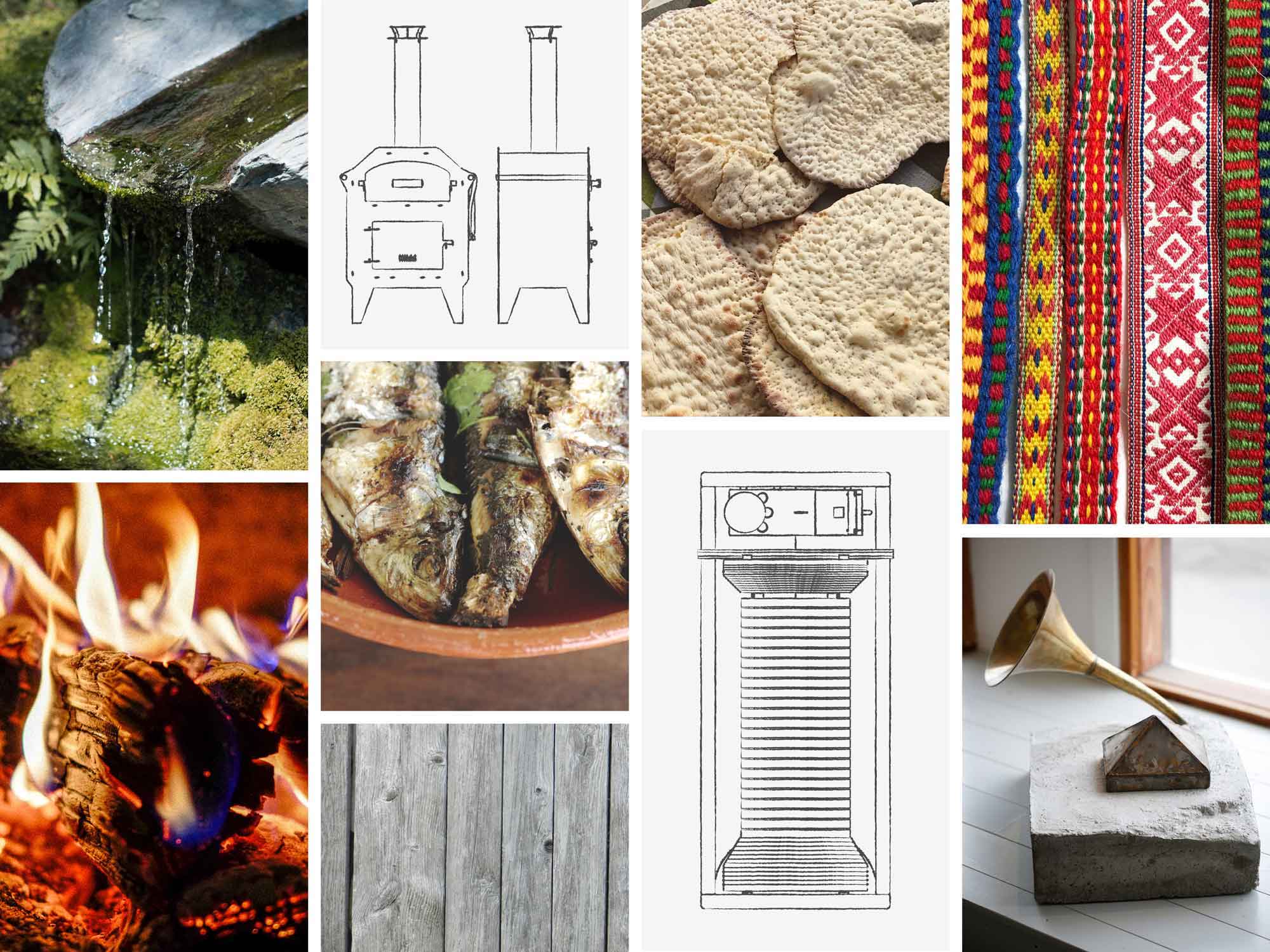
Raised in sparsely populated areas
All of us at Hikki have a common experience of having grown up in sparsely populated areas, with the closeness to nature it entails, but also of being surrounded by craftsmen, carpenters and other skilled craftsmen, who solved problems with great ingenuity without to think of themselves as designers for that. From that, we also have a respect and understanding for the materials, for the resources they require, and the importance of doing things that can withstand the wear and tear they are exposed to - whether it is a weld or a certain type of wood's ability to withstand seasonal wear.

Faster Greta
Aunt Greta, a wood-fired pizza oven and stove for outdoor use, made of durable corten steel, oak and refractory bricks. With Faster Greta we wanted to make a product that can be used all year round in all weathers, and at the same time bake the bread that characterized our upbringing - glödkaka or Gahkku in Sami, but also all imaginable dishes imaginable - pizza, bread, pots, gratins , grilled fish and meat, and with it, and at the same time be so durable that it is likely to be passed down between generations.
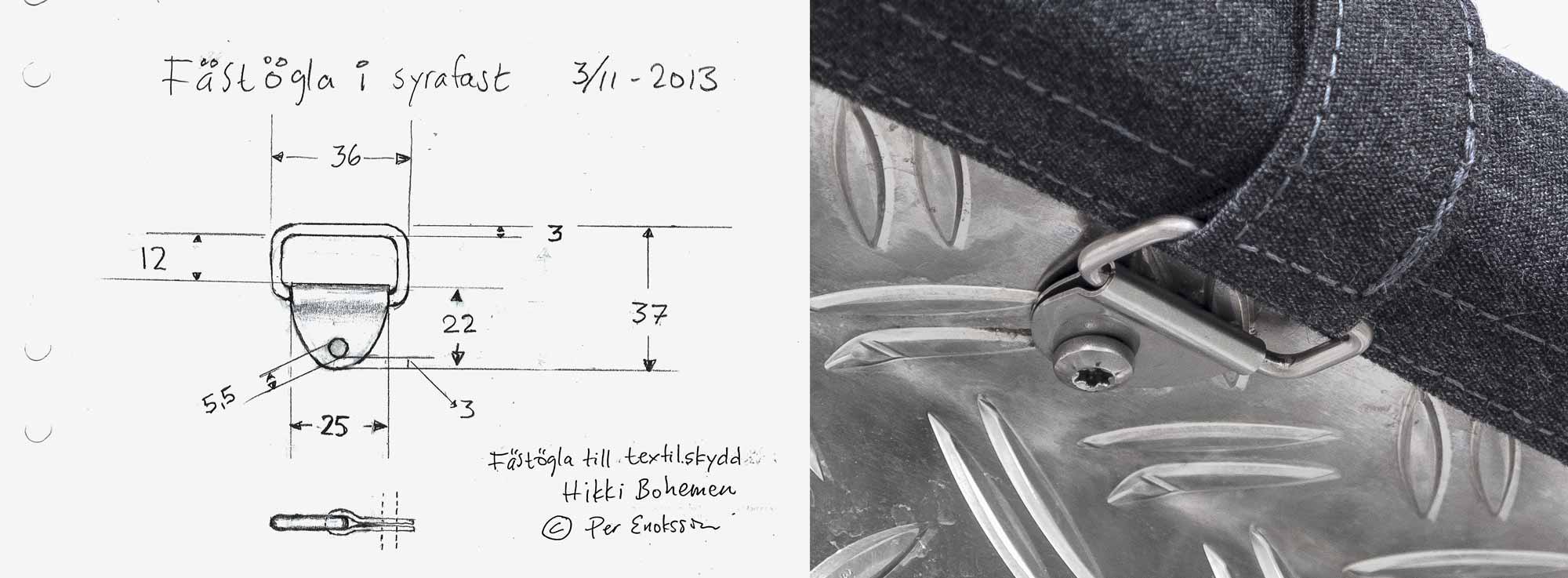
The things that are not visible
Design is also the things that are not visible - here a fastening loop for Bohemia's cover - a seemingly insignificant detail, but crucial for the cover to sit well on the bathtub.
Sustainability and the product life cycle
Sustainability is a word that is often used without anyone really fully understanding what is meant by it, therefore we want to be clear about what we mean - when we talk about sustainability, we mean it literally: our products must last and last. And hold.
All products require energy and raw materials to be created, and ours are no exception - which is why we feel it is our responsibility to design products with the longest possible lifespan, which require little fuel in the form of wood and water to achieve its function, and which is likely to be heirlooms rather than used for a few years and then tip over.
But when that day still comes after many years, and probably a generational change or two, our products are easy to recycle, as they completely lack composite materials, composite materials or attachments that complicate the recycling process. The wooden details are easily unscrewed from the metal and sorted as wood - or even better - given new life in a creative handicraft project, while the metal is melted down and becomes new raw material for future design or construction projects.
Quality materials notwithstanding - should any part still break, it is easily accessible to replace without the need for any special tools, which further extends the life of our products. We also stock spare parts, so if bad luck should occur, just contact us and we will do our best to solve it.

Corten steel is an extremely durable material that only becomes more beautiful over time, as it develops a brown-red surface rust from the course of nature and the seasons. Thanks to the Corten steel, Faster Greta will be a faithful companion for many, many years to come.
Oak has many fine properties - it is durable, hard and lasts up to 120 years untreated outdoors (Source: Franz Technologie des Holzes und der Holzwerkstoffe) In addition, it becomes - in our opinion - only more beautiful with the years then it assumes a silvery gray color if left untreated.
Short transports, ethics & constant considerations
Once a product is fully designed and thoroughly tested, it is in a way only half finished - after that come questions about production, stock , transport distances, etc. into the picture. In addition, the product must be packed in a way that ensures that it can be transported safely, but at the same time do so in a packaging that requires little resources and can be recycled in a simple way.
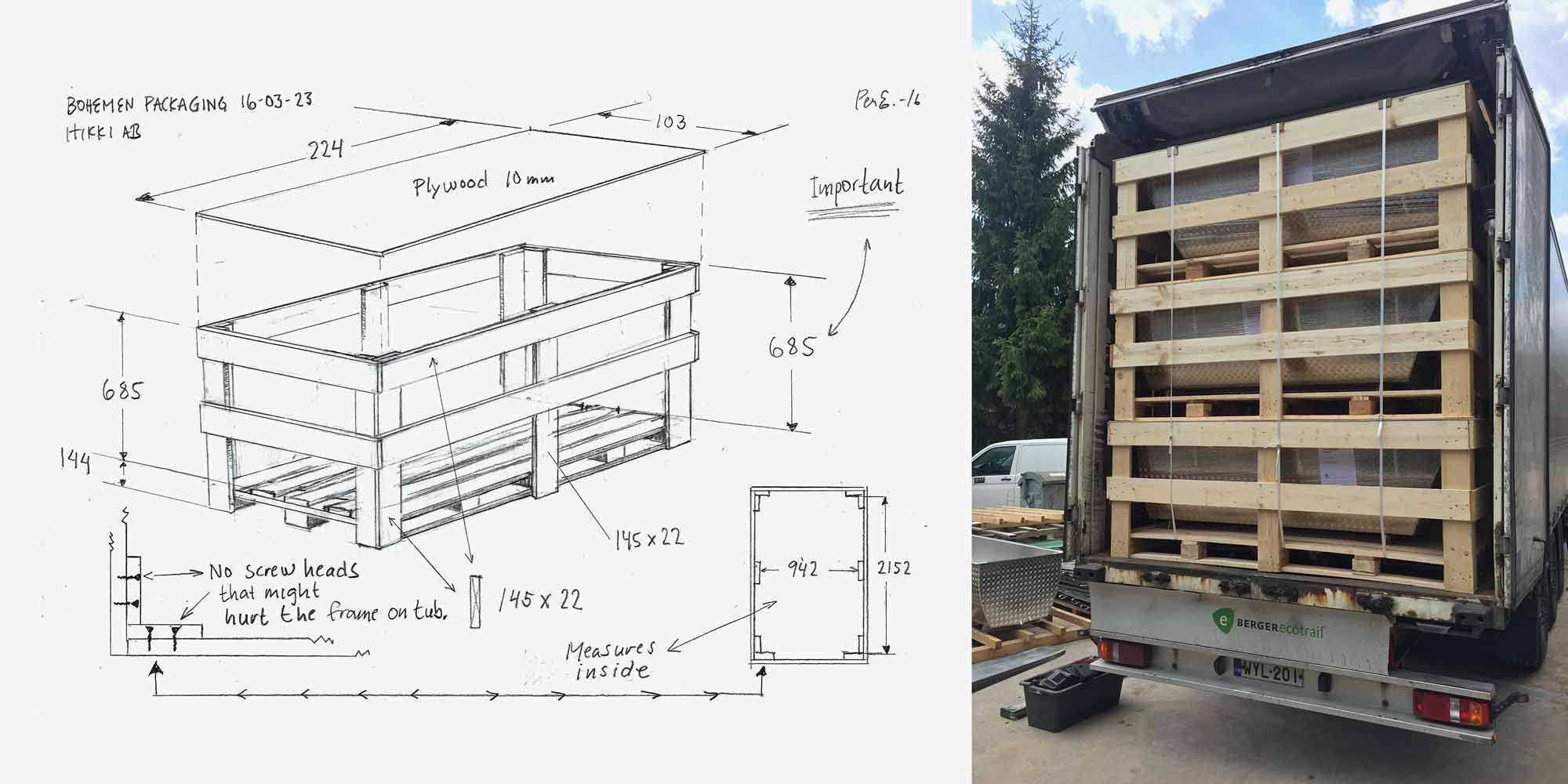
By specially designing our packaging, we can stack three Bohemians on top of each other - in this way we make the most of the shipping space and we do not have to contribute to transporting air, so to speak. Our products are manufactured in Riga in Latvia and have a journey of about seventy miles from the factory to our warehouse in Ängelholm, compared to the seven hundred miles that a trip from China, for example, could have meant. But this is just one of the reasons why we chose to locate our production in Riga, as we know that other important factors are also met by our partners, such as good working conditions, environmental considerations, union organization, environmental certifications, delivery security, clear and straightforward communication etc. - factors which we did not feel as confident in with manufacturing outside our immediate vicinity.In addition, we visit our partners often and have a detailed insight into the whole process as we have met and discussed production with everyone at the factory - the manager as well as the welder
Many products can consist of components from all corners of the world, all of which require their shipment to the factory for final assembly. For us, it is the opposite: all subcontractors for our large product series are within Riga's municipal boundaries, which means vanishing short transports. The only parts we produce outside Riga are the grill grills that come with Lillhälla and Faster Greta, the round bars for the cover and the fittings for the cover attachment - where production takes place in Sweden.
The manufacturing industry, like many other industries, is also the one in a transition work to greener production, cleaner electricity, less waste materials and less emissions, research in greener and smarter materials, something we have a constant dialogue about with our partners. In concrete terms, this means that we are always open to replacing any component with an environmentally smarter variant, to use recycled raw materials if possible and so on.