Save with our bundles


Our design process
When we develop our products, a lot has to be taken into account, from how much the wood swells in damp weather to the bending radius of the metal. But the starting point is always the materials. We choose the very best for function, wear resistance and lifespan. That way you can be sure that a product from Hikki will be with you for many, many years.
Taking an idea from a rough sketch on paper to something you grill a freshly caught Arctic char on means hundreds of choices, large and small, technical and aesthetic. How are the joints loaded? How does the heat affect the metal? Which oil should we use on the wood? Does the rounded corner sit well with the other lines of the design? And a shape or function that works on paper may well not feel right in the hand, which you only find out when the first prototype is tested.
In short, it is a complicated and often laborious process that takes many rounds of rework before a product is finished. But the feeling when you see that everything works as intended (or better), and that the product will probably be a well-liked companion in many people's lives for years to come, is hard to beat. That is why we do what we do. Designing products is not only about the practical, though. Even more, they are the sum of what we have experienced as people. What has shaped us, and how does it show in our design? What do we stand for?
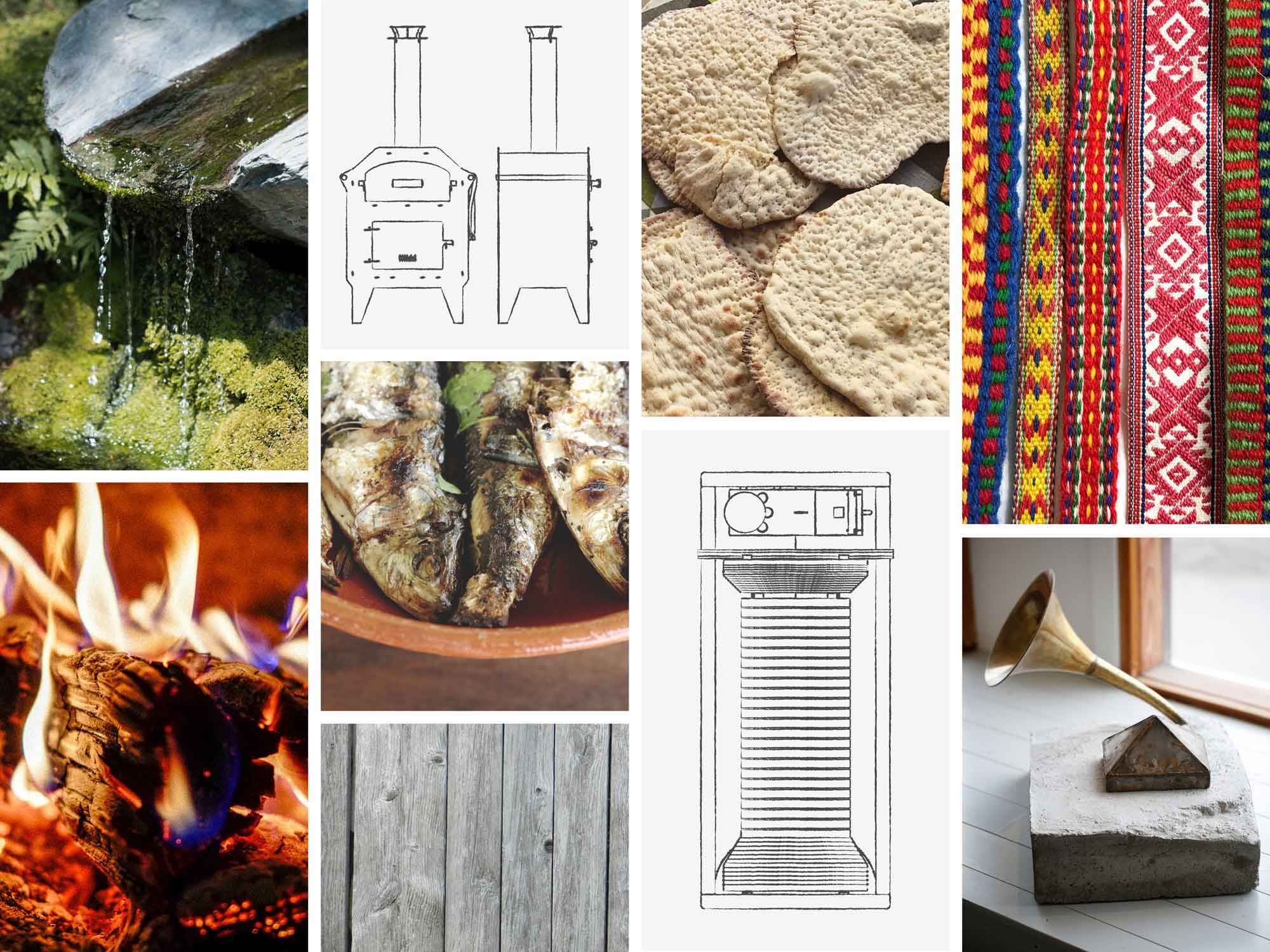
Growing up far from the cities
All of us at Hikki grew up in sparsely populated places, close to nature, and surrounded by craftspeople, carpenters and other skilled makers who solved problems with great ingenuity without ever thinking of themselves as designers. That is where our respect for materials comes from, and our understanding of them, of the resources they take, and of how important it is to make things that stand up to the wear they meet, whether that is a weld or a type of wood's ability to stand up to the seasons.

Faster Greta
Faster Greta is a wood-fired pizza oven and stove for outdoor use, made of hard-wearing corten steel, oak and firebrick. With Faster Greta we wanted to make something that can be used all year round in any weather, for baking the bread we grew up with, glödkaka or Gahkku in Sami, and every other dish you can think of: pizza, bread, stews, gratins, grilled fish and meat, and more. At the same time it had to be so hard-wearing that it will probably be handed down through the generations.
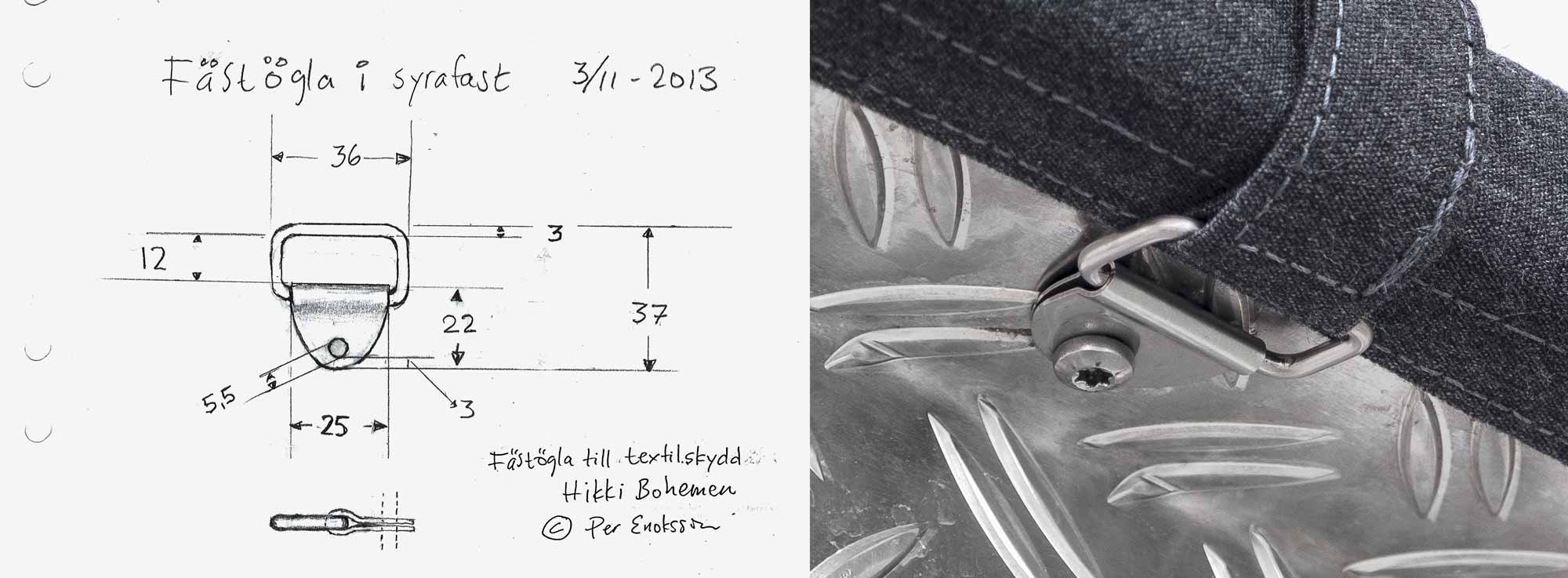
The things you don't see
Design is also the things you don't see. Here, a fastening loop for Bohemen's cover: a small detail, but it is what makes the cover sit well on the bath.
Sustainability and the life of a product
Sustainability is a word used so often that few people know quite what is meant by it, so we want to be clear about what we mean. When we talk about sustainability, we mean it literally: our products should last. And last. And last.
Every product takes energy and raw materials to make, and ours are no exception. That is exactly why we feel responsible for designing products with the longest possible lifespan, that need little fuel in the form of wood and water to do their job, and that are more likely to become heirlooms than to be used for a few years and end up at the tip.
And when that day does come, after many years and probably a generation or two, our products are easy to recycle, because they have no bonded or composite materials or fixings that make recycling harder. The wooden parts unscrew easily from the metal and are sorted as wood, or better still, get a new life in a craft project, while the metal is melted down and becomes raw material for future design or building projects.
Good materials or not, if a part does break, it is easy to get at and replace without special tools, which makes our products last longer still. We also keep spare parts in stock, so if you are unlucky, just get in touch and we will do our best to sort it out.

Corten steel is an extremely hard-wearing material that only looks better with time, as nature and the seasons give it a red-brown surface rust. Thanks to the corten steel, Faster Greta will be a faithful companion for many, many years.
Oak has many good qualities. It is hard-wearing, hard, and lasts up to 120 years untreated outdoors (source: Franz, Technologie des Holzes und der Holzwerkstoffe). And in our opinion it only gets more beautiful with age, as it turns silver-grey when left untreated.
Short transport, ethics and constant weighing up
Once a product is fully designed and thoroughly tested, it is in a way only half finished. Then come questions of production, stock, transport distances and more. The product also has to be packed so that it travels safely, in packaging that uses few resources and is easy to recycle.
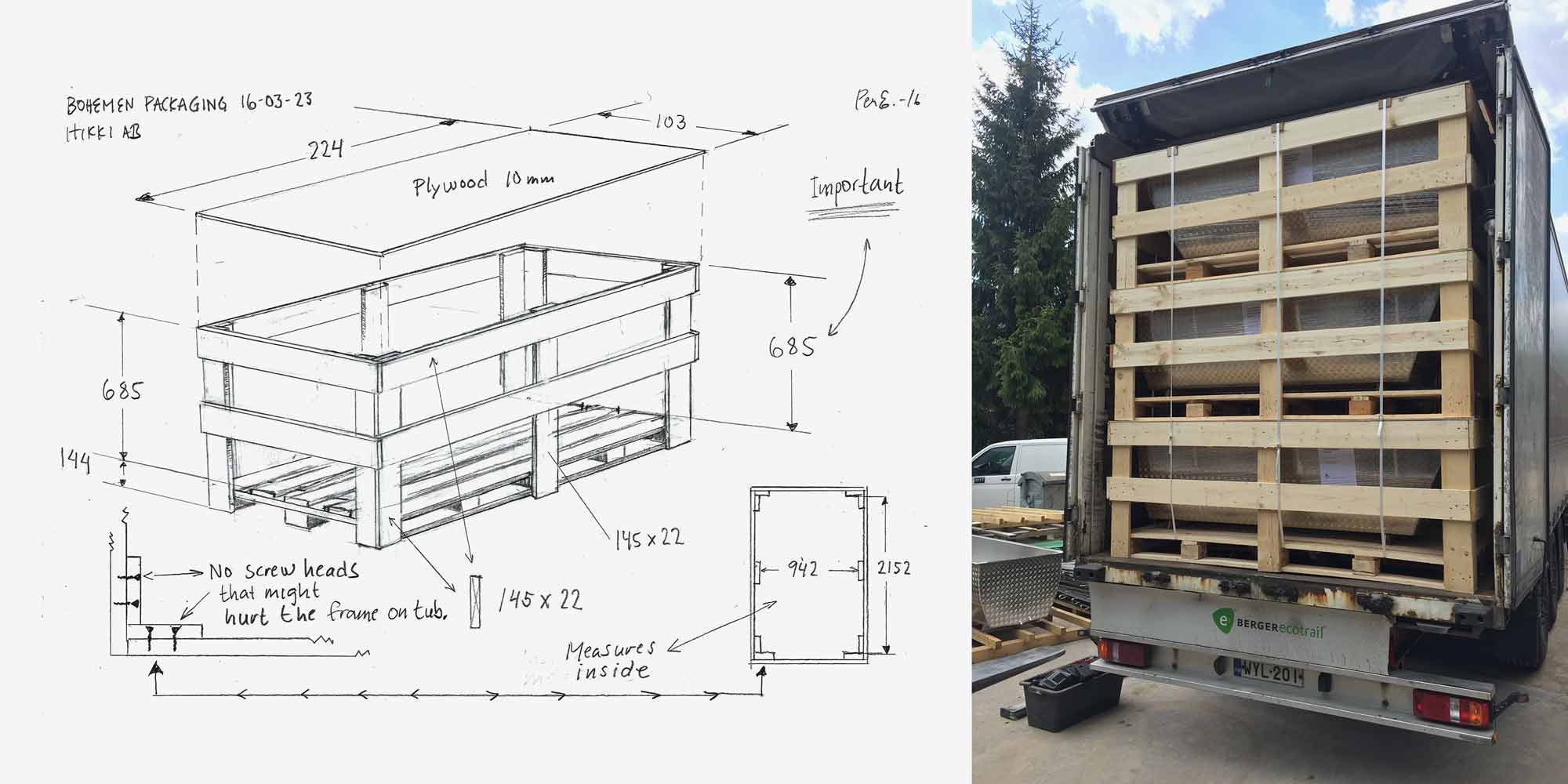
Because we designed our own packaging, we can stack three Bohemen on top of each other. That way we use the cargo space fully and avoid shipping air, so to speak. Our products are made in Riga in Latvia and travel about 700 km from the factory to our warehouse in Ängelholm, compared with the 7,000 km a journey from China, for example, could mean. But that is only one of the reasons we chose to make our products in Riga. We also know that our partners meet other important requirements, such as good working conditions, care for the environment, union representation, environmental certification, reliable delivery and clear, direct communication. Those are things we have not felt as sure of with production further away. We also visit our partners often and know the whole process in detail, as we have met everyone at the factory and talked about the production, the manager as well as the welder.
Many products are made of components from every corner of the world, each of which has to be shipped to a factory for final assembly. For us it is the other way round: every subcontractor for our large product lines is within Riga's city limits, so the transport distances are very short. The only parts we make outside Riga are the grill grates that come with Lillhälla and Faster Greta, the round rods for the cover and the fittings that hold it in place. Those are made in Sweden.
Like many other industries, manufacturing is changing towards greener production, cleaner electricity, less waste and lower emissions, with research into greener and smarter materials. We talk about this constantly with our partners. In practice, it means we are always open to switching a component for a more environmentally friendly one, to using recycled raw materials where possible, and so on.